


Smash Blast
4.51.60K Reviews
App Specs
- Version
- 1.0.5
- Updated On
- License
- Free
- Downloads
- 100,000+
- Developer
- Devsimo
- Categories
- Casual
- Platform
- Android
Screenshots
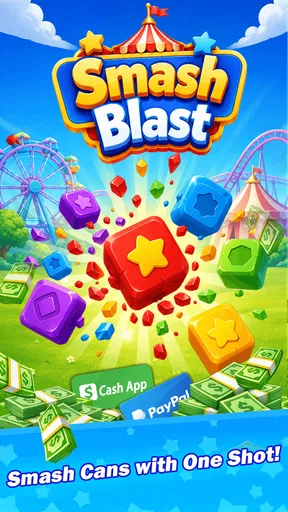
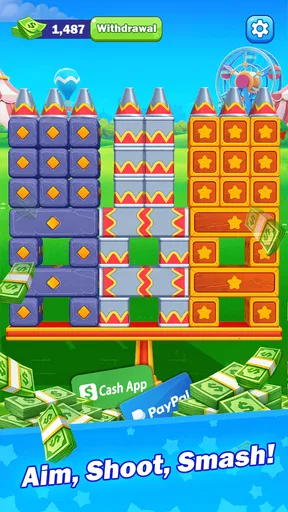
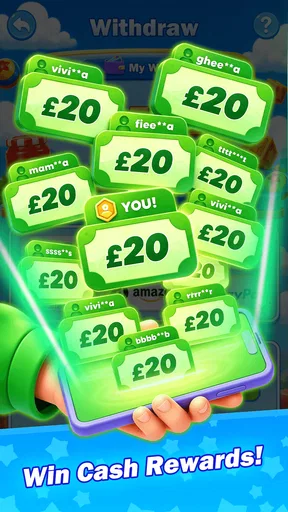
 Analysis by AppCompare
I like casual games best when they give me something satisfying to do right away, without asking for a long tutorial or a serious time commitment. Smash Blast is built around that simple appeal: line up a shot, send it toward a stack of cans, and enjoy the moment when the setup comes apart. It is a small, direct kind of fun, suited to a spare minute rather than an evening of complicated planning.
That simplicity is also the main thing to understand before downloading. This is a casual game from Devsimo, not a deep physics puzzler or a competitive action game. Its colorful carnival setting gives the can-smashing premise a playful wrapper, while the core satisfaction comes from judging a shot and seeing whether it clears the target. If that sounds appealing, it is easy to see why the game has found an audience; if you need a long-term progression system or elaborate mechanics, the basic premise may feel light.
One clear action, with room to judge the shot
I find the opening action easy to understand: choose where to aim, take the shot, and watch the cans respond. The useful question is whether that response gives you enough to judge your next move, not just whether the screen looks lively. That balance between a simple control and a readable outcome is what sets up the game’s feedback rhythm.
Getting into the first round
The appeal of the first action is how little setup the idea needs. You aim, shoot, and try to knock down the cans. There is no need to learn a complicated control scheme before the central challenge makes sense. I can imagine handing the phone to someone who has not played it before and explaining the goal in a sentence.
That clarity makes the game handy for short breaks. Waiting for a friend, taking a breather between chores, or filling a quiet moment on a commute are all natural occasions for a quick attempt. The game’s Everyone 10+ rating also places it within a broad family-friendly range, although parents should still decide whether its style and play are right for the particular child using the device.
The useful skill is not simply tapping quickly. Aiming asks you to consider where a shot should land and what the arrangement of cans might do when struck. I find that distinction important: the game is more engaging when I treat each attempt as a small decision instead of firing without looking. Aiming with a purpose gives even a straightforward level a little thought.
One practical tip is to pause for a beat before shooting. Look at the visible arrangement, pick a target area, and then commit to the shot. That tiny routine can make the action feel deliberate and helps you tell whether a miss came from rushed aiming or from a difficult setup. It also keeps the experience from becoming a string of identical taps.
Worth Reading Before You Choose

EA SPORTS FC Mobile 26 Is a Bigger Football Game, but It Takes Time

Flipboard Shows What News Apps Must Do Beyond the Feed

Switching to Android Auto Means Rethinking Your Driving Routine

Google Calendar Makes a Crowded Week Easier to Manage

Ludo King Makes the Most of the Minutes Between Plans

Baby Panda World Brings Quick Play to Modern Phones, but Its Game Library Feels Busy
How the feedback keeps the action moving
The satisfying part of this kind of game is the connection between intention and result. You choose a direction, release the shot, and get an immediate visual answer: cans fall, remain standing, or the arrangement changes in a way that shows how close you came. That clear feedback is what makes the basic action readable, especially when I am playing casually and do not want to study a screen full of instructions.
Colorful carnival levels help give the targets a cheerful sense of place rather than making every attempt feel like the same bare arrangement. Still, the theme is a frame for the action, not a substitute for it. The central question remains whether your aim and timing can turn a shot into a satisfying clear. Players who enjoy tactile, visible results will get more from that loop than those who want a story to follow.
There is a trade-off in keeping the rules so direct. Simple controls lower the barrier to entry, but they also put pressure on the level layouts and shot outcomes to stay interesting. If you prefer games where every session introduces a new tool, character, or strategic layer, the focused can-smashing premise may not offer enough variety on its own. I would approach it as a compact arcade diversion, not as a sprawling puzzle campaign.
For a better feel of the game, I would pay attention to what happens after each shot rather than only whether every can falls. A partial result can still show which part of the arrangement is vulnerable, helping you adjust your next choice if the level gives you another chance. This is a small but useful way to make the action feel like learning rather than simply repeating.
The reward is the clean result, not a complicated system
The immediate reward is visual and easy to understand: a well-judged shot turns a neat stack into a scattered one. That makes success legible without needing a score breakdown to explain why the attempt felt good. I like that kind of feedback when I have only a short window to play; the result arrives with the action instead of requiring me to remember a long chain of upgrades or objectives.
The game’s appeal depends on how much pleasure you get from that small payoff. If you enjoy lining up a shot and watching a target collapse, the core idea can be enough to bring you back. If rewards for you mean collecting equipment, building a character, or unlocking a large map of activities, this may feel more like a quick snack than a full meal. That is not a flaw so much as a useful expectation to set.
Its audience figures suggest that plenty of players have found the premise approachable: Smash Blast has an average rating of 4.5 from around 8.6 thousand ratings, with more than 100 thousand installs. I treat those numbers as context, not a promise that every player will enjoy it. The game’s strongest fit is still personal: whether aiming at a colorful can setup feels satisfying to you after the novelty of the first few shots.
There is also a useful distinction between this and the usual alternatives in casual gaming. A match-three game asks you to scan a board and plan combinations; an endless runner asks you to react continuously; a word game leans on recall. Smash Blast instead gives each attempt a physical-feeling target and a clear shot outcome. Choose it when you want a moment of aiming and impact, rather than a longer chain of decisions or a game that keeps demanding attention every second.
Why another session can begin
The loop works because it has a natural reset. After a shot resolves, I can take the result in, decide whether I want another try, and return to the simple aim-and-fire action. There is little mental overhead between attempts. That makes it easy to start a short session and just as easy to stop when the break is over.
For everyday use, that reset is most helpful when you want a game that does not punish you for setting the phone down. I would reach for it during a brief pause when I am not in the mood to remember a plot, coordinate with other players, or maintain a long run. The compact premise makes it approachable in those moments, while the shot itself supplies a reason to see whether the next attempt lands better.
That same convenience can become a limitation. A quick restart is not the same as meaningful long-term progression, and a repeated action can start to feel familiar if you are looking for a constant stream of new challenges. I would skip it if my priority were a rich solo adventure, a highly competitive leaderboard experience, or a puzzle game that rewards extended planning. Someone who dislikes aiming-based play may also find the central interaction too narrow, even with the lively setting.
One way to keep the game enjoyable is to give yourself a small goal for a session: make a more considered shot, try to clear a setup cleanly, or simply play one round while waiting. That gives the repeat action a purpose without pretending the game needs a complex personal challenge system. When I am done, the same simple structure makes it natural to put the phone away instead of feeling obliged to keep grinding.
Practical fit, access, and who should try it
Smash Blast is free, which makes it easy to try if the premise sounds fun. It is listed at version 1.0.5 and requires Android 7.0 or later. Its casual focus makes it a sensible option for players who want a straightforward game they can understand quickly, and for families looking for a playful target-smashing idea within the stated age rating. The title has 1.6 thousand written reviews as well as its larger pool of ratings, so there is a substantial group of players who have chosen to leave feedback.
Before installing, I would think about what I expect from a free casual game. If I want an immediate, low-friction activity built around aiming and visible results, this is a plausible fit. If I want deep strategic systems, an ongoing narrative, or a wide range of distinct activities, I would choose another kind of game. The same goes for anyone who finds repetitive arcade loops tiring; the central action is the point, so it will not disappear after the opening moments.
For a parent or a shared-device household, the Everyone 10+ rating is a useful starting point, but it is not a substitute for judging a game in context. I would also let a new player try the basic interaction and see whether they enjoy aiming before assuming the cheerful presentation alone will hold their attention. The control idea is easy to explain, but the appeal still comes down to whether knocking down the targets feels rewarding to that person.
My verdict on the loop
I see Smash Blast as a focused little diversion: choose a shot, watch the cans react, enjoy a successful clear, then decide whether to take another turn. Its strongest quality is that the action and feedback are easy to understand without a long commitment. The carnival color gives the simple premise personality, while the reset between attempts suits short, everyday breaks.
My recommendation is conditional but clear. Try it if you like quick aiming games and find satisfaction in turning a careful shot into a visible result. Skip it if you need deep progression or a constantly changing set of mechanics to stay interested. As a casual game from Devsimo, it knows the small experience it is offering; the question is whether that neat cycle of aim, impact, reward, and reset is the kind of break you want.
A good fit for waiting-room minutes, not every kind of break
I would choose it for a specific sort of downtime: a few minutes before an appointment, a short pause while food is cooking, or a quiet stretch when I can look at the screen but do not want to commit to a longer game. The action is easy to understand at a glance, so I can return after being interrupted without needing to reconstruct a plan. That is a real advantage over games built around a continuous run or a puzzle that asks me to hold several moves in mind.
It is less suited to moments when I need to keep my eyes elsewhere, such as walking through a busy station or keeping watch over a child. Aiming is the point, so the game still asks for visual attention even though its sessions can be brief. I would save it for a safe pause rather than treating it as background entertainment.
Make each attempt more informative
A useful way to avoid wasting shots is to decide what you are trying to learn before you fire. Instead of treating every attempt as an all-or-nothing clear, notice whether the target you chose shifted the rest of the arrangement. That gives a miss some value: you can make a more informed choice on a later attempt if one is available, rather than simply repeating the same aim.
This approach also clarifies whether the game is holding your attention for the right reason. If you enjoy testing a small adjustment and seeing a different result, its focused loop may stay pleasant. If you quickly want additional objectives beyond the shot itself, the same narrowness will probably show up early. I would use the free download as a low-risk way to answer that personal question, rather than assuming a high average rating means it must suit every casual player.
What to expect before choosing it
The title is a game for Android, with a minimum OS requirement of 7.0, and its current version is 1.0.5. It is free to try, while the Everyone 10+ age rating offers a starting point for families deciding whether its content is appropriate. Those practical details make the initial decision straightforward, but the more important question is whether you want a game whose central pleasure comes from aiming and watching a target react.
For me, the strongest reason to give it a chance is that it asks for a small, clear decision and gives a visible result in return. The strongest reason to move on is equally clear: if that exchange stops feeling fresh, there is no deep story or broad set of activities here to change the kind of play. I would recommend it to someone looking for a brief carnival-style aiming diversion, while pointing a strategy-minded friend toward a game with more room to plan across a longer session.
That makes Smash Blast easiest to judge on its own terms. It is not trying to replace a substantial puzzle adventure or a competitive game; it offers a compact action, a readable response, and a natural stopping point. If that is exactly what I want from a spare moment, I would happily take another shot.
Pros
- Quick rounds make it easy to play in short sessions.
- Simple controls are accessible to new players.
- Satisfying blasts make clearing targets feel rewarding.
- Increasing difficulty offers a steady challenge.
- A casual format suits both brief and longer play sessions.
Cons
- Repeated levels may feel predictable over time.
- Later stages can become frustratingly difficult.
- Progress may feel slow without frequent rewards.
- Visual effects can make busy levels harder to read.
- Some players may find the gameplay lacks variety.
FAQs for Smash Blast
What is Smash Blast?
Smash Blast is an arcade-style game built around quick rounds and straightforward smash-and-blast action. Its simple premise makes it easy to pick up, while progressing through the game is intended to provide ongoing challenges. The exact modes, objectives, and features can vary between versions, so check the app-store listing and screenshots to confirm that the edition available for your device matches what you are looking for.
Is Smash Blast free to download, and does it include in-app purchases?
The price and monetization for Smash Blast depend on the version and the store where you download it. A game may be free to install but still offer optional purchases, such as items, upgrades, or ways to remove advertising. Review the current Google Play or Apple App Store listing before installing, and check your device’s purchase settings if you want to prevent accidental spending.
Can I play Smash Blast offline?
Offline availability depends on how the particular version of Smash Blast handles gameplay, ads, and progress. Some arcade games allow their core rounds to be played without an internet connection, while other features may require connectivity. Check the store description and, if possible, test the game after installation with your device offline. An internet connection may still be needed for updates or online features.
Which devices support Smash Blast?
Smash Blast may not be available for every Android phone, tablet, or iPhone. Compatibility depends on the game’s current system requirements, your operating-system version, and availability in your region. Before downloading, open its official store page on the device you plan to use and confirm that installation is offered. Also make sure you have enough free storage for the download and any later updates.
Is Smash Blast suitable for children, and what should parents check?
Suitability depends on the game’s age rating and the content in the specific version offered in your region. Before a child plays, review the rating, screenshots, description, and any information about advertising, online interaction, or in-app purchases on the official store page. Parents can also use device-level purchase approvals and screen-time controls, especially if the game is played on a shared phone or tablet.


